.svg)


Most AI pilots in financial crime compliance don't stall on technology. They stall somewhere between a promising demo and a compliance officer willing to sign off on the output.
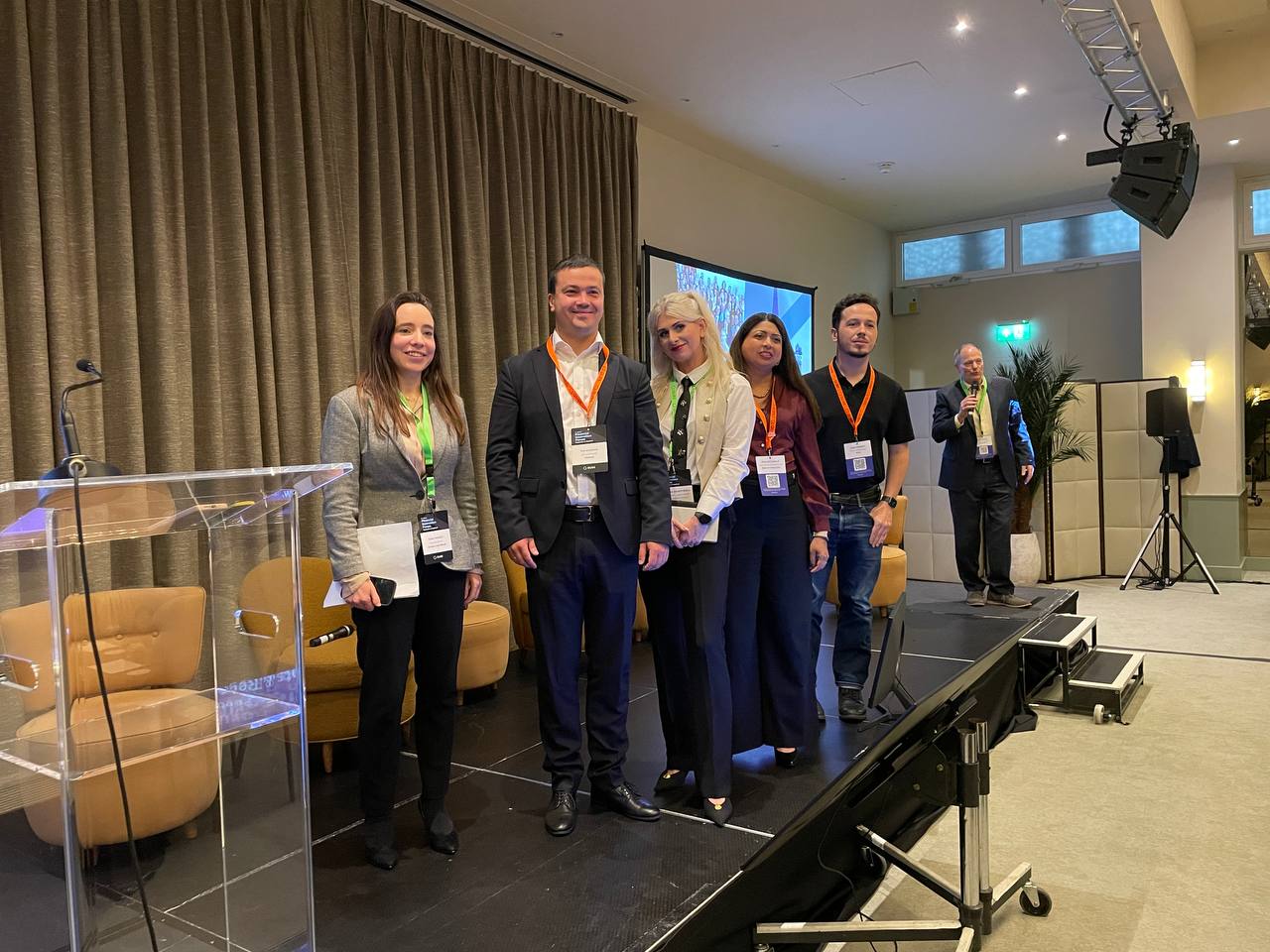
That gap ran through the conversation at Vivox AI's private dinner at The Shelbourne in Dublin on 5 October.
The dinner was co-hosted by Prof. Axel Weber, former president of the Deutsche Bundesbank and former chairman of UBS Group, and Tim Khamzin, founder and CEO of Vivox AI. Senior banking and payments leaders, former regulators and AI experts sat around one table under the Chatham House Rule.
Here is what came up.
Six uncomfortable truths about putting AI to work in financial crime compliance
1. Your manual process is not the gold standard
Parallel testing is usually framed as checking AI against humans. In practice, it tests both. When results diverge, sometimes the AI has missed something. Sometimes it has found what analysts had been missing for years. Manual work is a useful benchmark, but it isn't ground truth.
Accuracy alone isn't enough either. A system that reaches two different conclusions on the same case is a problem, even if both are defensible.
2. AI creates work before it saves it
For months, teams run two processes side by side, review AI outputs and investigate every discrepancy. Each new release resets part of that effort. Business cases that promise immediate headcount savings set programmes up to disappoint. The honest pitch is capacity and better detection first, and lower cost later, if at all.
3. The people who generate the risk rarely pay for it
Commercial teams book the revenue from new customers. Compliance absorbs the cost of onboarding and monitoring them. Until that cost is visible to the business that creates it, there is little pressure to fix processes upstream. AI won't solve an incentive problem.
4. Your budget cycle is slower than the technology
A capability that didn't exist when this year's budget was agreed may be production-ready six months later. Institutions that can only evaluate new tools once a year will always be a cycle behind. The real question isn't whether to spend. It is how to make room for testing between budget rounds without losing control of cost and risk.
5. Who will supervise the AI in five years?
If AI takes over first-pass review, how do junior analysts build the judgement they will need to challenge it? Preserving that expertise has to be a deliberate choice, because it won't happen as a by-product. Accountability can't be outsourced, either to a model or to a vendor.
6. More data is not the same as a better picture
Pulling together registries, subscription services and local databases saves research time. It doesn't answer whether the information is current, relevant and sufficient, and the answer varies sharply by jurisdiction. Consolidating onto one provider simplifies the workflow but concentrates dependence. Institutions need to know what sits behind every output.
The bottom line
Doing nothing is not a neutral position. Instant payments are shrinking the window to stop fraud, and supervisory expectations keep rising. The institutions that move beyond pilots won't be the ones with the boldest roadmaps. They will be the ones that can prove, case by case, that their controls work.
At Vivox AI, we build explainable AI agents for AML and KYB, with audit trails and human oversight by design. Thank you to everyone who joined us in Dublin and made it such a candid evening.
.png)